I just finished reading the newest work of Mormon scholarship on women administerring blessings in the early church written by Johnathan Stapley and Kristine Wright. Its surprisingly long-85 pages- most of which chronicles examples of women giving blessings between the 1830s and 1940s. The purpose of the article was actually to trace the changing views on the practice overtime and map how the practice was discontinued. Now that I have read it, I see a few places in which questions remain and I believe are worthy of further investigation.
A few questions that are lingering for me:
The 1949 statement of Joseph F. Smith did not actually prohibit the blessing and annointing of women during pregnancy (which was the only remaining allowable activity left to women of the church), so how and why then did it actually get discontinued? Where are the statements discouraging, rebuking, and correcting those who continued the practice? And if those statements do not exist, what then is keeping women of the church from continuing to give blessings to pregnant women?
What were the reactions of women of the church to the gradual restrictions placed on their religious practice of healing? Was there upset? Disappointment? Dissent?
The authors briefly refute the D. Michael Quinn claim that there is evidence supporting the idea that women were ordained to the priesthood but do not cite a more indepth refutation. Is there a scholarly work that does argue against Quinn's thesis?
Also missing from the article is the So What? An answer to the question, What do this mean for us now as Latter-day Saints? Is it enough to be comforted by knowledge of this heritage (e.g. that somehow knowing that women used to collaborate in the blessings of women, and the sick and afflicted makes us equal)? Ought there to be an effort to reclaim this privilege? What are the thoughts and feelings of LDS women to this knowledge? What is their response to the practice being phased out?
I will likely come back and write my more personal thoughts on this topic but for now I needed to get these questions down.
Monday, February 14, 2011

Sunday, February 6, 2011
Pondering on death, nature and eternal perspectives
In environmental biology, death is necessary in order to maintain population equilibrium when there is too much of one specie, it throws the whole system off. For example too many eagles in a population could kill off all of the frogs in an area and the area would be overrun with mosquitos and other flying insects because the frogs aren't there to keep their population in check. Death is a primary means of controlling population and maintaining that equilibrium. This then ties into the idea of "survival of the fittest," in order for populations to thrive, the weakest (often the young, old and sickly) need to not stand in the way of the overall population being healthy. If that means picking up and moving 2,000 miles, the weak are not able to make that trek, and they die either before the trip or along the way.
In that way, I do not think that death is a mistake of nature when all of the species of the natural world depend on a finite number of resources. The earth would not be able to provide for everyone and everything if everything lived forever. To maintain an eternal perspective, we must be willing to believe that this world is not all that there is. Is there an ideal place where there are enough resources to maintain life for everyone and everything without depleting those resources? Yes. Is it the earth in its state right now? No.
We do have the promise of a celestialized world where all of those concerns will not exist anymore or perhaps, we'll have been the ones to figure out the sustainable solutions rather that expect Christ to come and save us in our sins (e.g. fixing everything that we have so royally screwed up). So with that, you can find the eternal perspective of looking forward to when the earth is not limited by finite resources and have optimism that someday that ideal will be realized.
When it comes to connecting with nature, ritual and elements, while here on earth, I think it requires a healthy respect for death and an understanding of how all things work together for good. Nature is an intricate dance of interactions between species and systems. It finds a balance and has a way to correct imbalances over time. No mortal human or group of humans could work it out so well. I believe because nature is so finely tuned to work properly and that there are even good reasons for things to work improperly at times. Because of this, I believe that nature is worthy of respect and reverence. After all, without it, we could not exist. The elements are essential to our survival.
If we are to develop beyond where we are now and if we hope to turn our attentions to the things of the next world, we still have to respect and be mindful of the needs of now. I believe that as we make ourselves and our world healthier that we are more capable of learning what life has to offer us. This I believe is the intention behind of the Word of Wisdom (D&C 89).
At the same time, we are in the process of preparing to become gods (D&C 132:20). We are going to have to figure out at some point how to create and maintain worlds so life can perpetuate itself. If we are wise stewards on the earth now, we are like the servants in the parable of the talents (Matthew 25). When we are given something to start with, we are capable of turning in to something more or better than what we started with. Isn't that what is happening with us? And isn't that what we are supposed to do as gods?
I truly fear the the people who believe that it is not useful to sustain and conserve the earth are being like the servant who hides his talent. To me, its not so much a matter of replenishing the earth (because that implies taking it back to a previous state) but it is a matter of making the world better than when we started. And really, this is leading me to a new idea, that replenishing the earth may be a direction to restore the earth to its paradisiacal state in the Garden of Eden. That us humans are expected to figure out how to make that possible. I suspect that its a case "after all you can do, it is by grace you saved"(2 Nephi 25: 23) or in other words the parable of the bicycle. The little girl works and earns money to buy a bicycle but her parents pitch in the rest after she did all he could to earn the money. The Atonement works that way for us (Believing Christ: subheading Give Him All That We Have). After we put forth our best effort, do all we can and get as close as possible to attaining a seemingly (or truly) impossible goal, Christ, our Older Brother, will make up the rest of us and makes our efforts successful in attaining the goal.
In fact, I kind of have a theory that Christ will not come again until we have done as we can do to make the world as healthy and sustaining for everyone as possible. Its not until we do all we can, that he will come again and pick up where we left off.
I realize this is somewhat in contradiction to the general teachings of the Second Coming, but it is how I am finding a way to continue caring about this life. The ethical, right, good, praiseworthy choice seems to be working to make the world a better place through comforting those who stand in need of comfort and mourning with those who mourn. Often that can be done by working to prevent the situations where mourning is necessary (as in the case of infant mortality or unemployment). There is much much good that we can do in this world, and it makes no sense to not do it.
In that way, I do not think that death is a mistake of nature when all of the species of the natural world depend on a finite number of resources. The earth would not be able to provide for everyone and everything if everything lived forever. To maintain an eternal perspective, we must be willing to believe that this world is not all that there is. Is there an ideal place where there are enough resources to maintain life for everyone and everything without depleting those resources? Yes. Is it the earth in its state right now? No.
We do have the promise of a celestialized world where all of those concerns will not exist anymore or perhaps, we'll have been the ones to figure out the sustainable solutions rather that expect Christ to come and save us in our sins (e.g. fixing everything that we have so royally screwed up). So with that, you can find the eternal perspective of looking forward to when the earth is not limited by finite resources and have optimism that someday that ideal will be realized.
When it comes to connecting with nature, ritual and elements, while here on earth, I think it requires a healthy respect for death and an understanding of how all things work together for good. Nature is an intricate dance of interactions between species and systems. It finds a balance and has a way to correct imbalances over time. No mortal human or group of humans could work it out so well. I believe because nature is so finely tuned to work properly and that there are even good reasons for things to work improperly at times. Because of this, I believe that nature is worthy of respect and reverence. After all, without it, we could not exist. The elements are essential to our survival.
If we are to develop beyond where we are now and if we hope to turn our attentions to the things of the next world, we still have to respect and be mindful of the needs of now. I believe that as we make ourselves and our world healthier that we are more capable of learning what life has to offer us. This I believe is the intention behind of the Word of Wisdom (D&C 89).
At the same time, we are in the process of preparing to become gods (D&C 132:20). We are going to have to figure out at some point how to create and maintain worlds so life can perpetuate itself. If we are wise stewards on the earth now, we are like the servants in the parable of the talents (Matthew 25). When we are given something to start with, we are capable of turning in to something more or better than what we started with. Isn't that what is happening with us? And isn't that what we are supposed to do as gods?
I truly fear the the people who believe that it is not useful to sustain and conserve the earth are being like the servant who hides his talent. To me, its not so much a matter of replenishing the earth (because that implies taking it back to a previous state) but it is a matter of making the world better than when we started. And really, this is leading me to a new idea, that replenishing the earth may be a direction to restore the earth to its paradisiacal state in the Garden of Eden. That us humans are expected to figure out how to make that possible. I suspect that its a case "after all you can do, it is by grace you saved"(2 Nephi 25: 23) or in other words the parable of the bicycle. The little girl works and earns money to buy a bicycle but her parents pitch in the rest after she did all he could to earn the money. The Atonement works that way for us (Believing Christ: subheading Give Him All That We Have). After we put forth our best effort, do all we can and get as close as possible to attaining a seemingly (or truly) impossible goal, Christ, our Older Brother, will make up the rest of us and makes our efforts successful in attaining the goal.
In fact, I kind of have a theory that Christ will not come again until we have done as we can do to make the world as healthy and sustaining for everyone as possible. Its not until we do all we can, that he will come again and pick up where we left off.
I realize this is somewhat in contradiction to the general teachings of the Second Coming, but it is how I am finding a way to continue caring about this life. The ethical, right, good, praiseworthy choice seems to be working to make the world a better place through comforting those who stand in need of comfort and mourning with those who mourn. Often that can be done by working to prevent the situations where mourning is necessary (as in the case of infant mortality or unemployment). There is much much good that we can do in this world, and it makes no sense to not do it.
Thursday, January 27, 2011
Not in the Lord's program
A couple of people have brought this quote from President Hinckley to my attention over the last few days and I have been seriously pondering it. Especially interesting to me was how it could be contrasted with the interview he gave with David Random with ABC Australia news in 1997.
In both statements (on Mormon.org and interview with David Ransom), he says essentially the same thing "Women do not hold the priesthood because the Lord has put it that way. It is part of His program." However, one of the statements is much more definitive than the other. When asked by Ransom, if that could change, President Hinckley said that it could change but that it hasn't and won't because "there is no agitation for that."
My view is basically that in the quote published on Mormon.org, though he did not go onto state that the policy of women receiving the priesthood is subject to change, he could have. In a way, it does a disservice to the women of the church and those who care about equality for him to leave it like its a firm degree of God that women do not have the priesthood. In fact, there is no recorded revelation in the scriptures that says that only men are supposed to hold the priesthood. In my understanding of the doctrine, the scriptures are silent on that aspect of the priesthood.
Of course, him being prophet, he could have personally received a revelation saying that it was not God's will for women to hold the priesthood. Three problems though if that is the case: he did not ever clearly communicate this to the general membership of the church; he elsewhere mentioned that a revelation could be given that would change it (implying that a revelation did not set the policy in place originally); and any inspiration he had pertaining to women and the priesthood may have been applicable in that time but could be subject to change when revealed by the Lord that the time is right. For these reasons, I think its safe to say that the statement on Mormon.org is not authoritatively saying that it is God's will that women should not hold the priesthood. In any case, I highly doubt that he gave the matter serious attention and ever prayed to know if the current policy was God's will or not. I personally belief if he had asked, he would have received a very different answer (and the fact that he says a revelation could be received leads me to believe that he never did ask).
President Hinckley may not have been aware of the history of women and the priesthood. It would not surprise me that he hadn't read deeply into church history on that topic so he would not have known that Joseph Smith and many early Saints believed that women receive the priesthood (that is in the D. Michael Quinn chapter for quick reference).
It seems that the reasoning he is using in that statement follows like this: if women do not have the priesthood, then it must be because God revealed it to someone along the way that they are not supposed to. Because women do not have the priesthood, it must mean that God does not want them to." However, we both know how revelation works. People and prophets do not receive revelation by it coming out of the sky, but they must seek to know it. If no one ever received a revelation saying specifically that women cannot have the priesthood, then it has not been recorded and it is not contained within our scriptures. Many people speculate the reason women didn't receive the priesthood is due to cultural values of the time (though we have recorded in the Old and New Testaments instances of women as prophetesses and priestesses whether this was through the Melchizedek priesthood or not).
This is one of those cases where personal vs hierarchical revelation becomes tricky. What if Heavenly Father were to recognize that its important for a person's spiritual health to know specifically whether it is God's will for women to have the priesthood or not? Would HF reveal to a member of the church personally one way or the other? If He did, would that be different or the same as a person receiving revelation for the church or is it just for personal knowledge? Are there other examples of things that people can learn through the Spirit that may not be revealed to the leaders of the church but they can know for themselves?
I have my ideas but I want to hear yours.
In both statements (on Mormon.org and interview with David Ransom), he says essentially the same thing "Women do not hold the priesthood because the Lord has put it that way. It is part of His program." However, one of the statements is much more definitive than the other. When asked by Ransom, if that could change, President Hinckley said that it could change but that it hasn't and won't because "there is no agitation for that."
My view is basically that in the quote published on Mormon.org, though he did not go onto state that the policy of women receiving the priesthood is subject to change, he could have. In a way, it does a disservice to the women of the church and those who care about equality for him to leave it like its a firm degree of God that women do not have the priesthood. In fact, there is no recorded revelation in the scriptures that says that only men are supposed to hold the priesthood. In my understanding of the doctrine, the scriptures are silent on that aspect of the priesthood.
Of course, him being prophet, he could have personally received a revelation saying that it was not God's will for women to hold the priesthood. Three problems though if that is the case: he did not ever clearly communicate this to the general membership of the church; he elsewhere mentioned that a revelation could be given that would change it (implying that a revelation did not set the policy in place originally); and any inspiration he had pertaining to women and the priesthood may have been applicable in that time but could be subject to change when revealed by the Lord that the time is right. For these reasons, I think its safe to say that the statement on Mormon.org is not authoritatively saying that it is God's will that women should not hold the priesthood. In any case, I highly doubt that he gave the matter serious attention and ever prayed to know if the current policy was God's will or not. I personally belief if he had asked, he would have received a very different answer (and the fact that he says a revelation could be received leads me to believe that he never did ask).
President Hinckley may not have been aware of the history of women and the priesthood. It would not surprise me that he hadn't read deeply into church history on that topic so he would not have known that Joseph Smith and many early Saints believed that women receive the priesthood (that is in the D. Michael Quinn chapter for quick reference).
It seems that the reasoning he is using in that statement follows like this: if women do not have the priesthood, then it must be because God revealed it to someone along the way that they are not supposed to. Because women do not have the priesthood, it must mean that God does not want them to." However, we both know how revelation works. People and prophets do not receive revelation by it coming out of the sky, but they must seek to know it. If no one ever received a revelation saying specifically that women cannot have the priesthood, then it has not been recorded and it is not contained within our scriptures. Many people speculate the reason women didn't receive the priesthood is due to cultural values of the time (though we have recorded in the Old and New Testaments instances of women as prophetesses and priestesses whether this was through the Melchizedek priesthood or not).
This is one of those cases where personal vs hierarchical revelation becomes tricky. What if Heavenly Father were to recognize that its important for a person's spiritual health to know specifically whether it is God's will for women to have the priesthood or not? Would HF reveal to a member of the church personally one way or the other? If He did, would that be different or the same as a person receiving revelation for the church or is it just for personal knowledge? Are there other examples of things that people can learn through the Spirit that may not be revealed to the leaders of the church but they can know for themselves?
I have my ideas but I want to hear yours.
Monday, January 24, 2011
Needing the gospel to be simple
The gospel is simple for those who need it to be but expansive, complex and awesomely thought-provoking for those who don't need it to be. The people who need to get by with the gospel in terms of scripture stories, parables and being commanded in all things still make it through this life having accomplished what it is they set out to do. And that works for them. Its good for them. I think of the phrase in the Word of Wisdom "adapted to the capacity of the weak and the weakest of all saints." If that's all they can handle, then its a good thing that there is a program that works for them. Quite honestly, the church is best at this program for these members.
Its not so good at what I call the underbelly and that's where I find myself. A friend once suggested that to me that HF/HM want and need Sunstone/Dialouge/JMHA/Mormon Stories, etc. to exist because it provides the outlet and "meat of the gospel" for those who need it. In that way, there is enough of what each group needs.
The only problem comes when the Butter Side Up and the Butter Side Down people (name that reference for 1,000 points) get on persecuting and harshly judging each other. Often it comes from feeling threatening and a perception that the "other" is thinking negatively about self and then people start jumping to defensiveness and criticism which are two of the horsemen of the apocalypse (according to marriage researcher John Gottman).
I'm happy to live and let live for the people who need the gospel to be simple, *IF* they can allow me the same respect.
We here have obviously taken the blue pill (I think the gospel=simple folks took the red pill because they are stopped in their understanding) and we have very valid concerns that we will not be treated respectfully and kindly by those who live the gospel differently than we do. We after all have the memory of excommunications for apostasy because of others' earnest desires to seek and know.
I don't exactly understand why the gospel=simple people are SO defensive and protective of their stance and why they find us so threatening. Maybe its hard enough as it is for them that the thought of something harder is unbearable?
This is kind of my thoughts taking a turn but I'll just make this case for those of us who are here: if the plan really is to be able to create, lead and sustain our own worlds, we are going to need to know and understand a great deal more than what the 72 correlated points teach us. The way I see it, those who seek the mysteries of the gospel and aim to understand the complexities are getting some progressing done here on the earth that for the gospel=simple folks is saved for much later. At point, they are going to have to mature in their thinking and understanding. But it is going to have to be on their own time, in a way that God knows best.
Its not fair for us to force it (thinking: "for it is not requisite that a man should run faster than he has strength" Mosiah 4:27) but at the same time I do believe there can be more balance, respect and openness at church for all of us to fit there. There may be times that we can introduce some of our ideas in a way that does not inflame them and I would guess that the Spirit would be able to enlighten us at those times and with the right words.
Want to try an experiment where those of us who attend church pray to know the right words/timing to say something that is near and dear to our hearts? And then report here when it happens....
Its not so good at what I call the underbelly and that's where I find myself. A friend once suggested that to me that HF/HM want and need Sunstone/Dialouge/JMHA/Mormon Stories, etc. to exist because it provides the outlet and "meat of the gospel" for those who need it. In that way, there is enough of what each group needs.
The only problem comes when the Butter Side Up and the Butter Side Down people (name that reference for 1,000 points) get on persecuting and harshly judging each other. Often it comes from feeling threatening and a perception that the "other" is thinking negatively about self and then people start jumping to defensiveness and criticism which are two of the horsemen of the apocalypse (according to marriage researcher John Gottman).
I'm happy to live and let live for the people who need the gospel to be simple, *IF* they can allow me the same respect.
We here have obviously taken the blue pill (I think the gospel=simple folks took the red pill because they are stopped in their understanding) and we have very valid concerns that we will not be treated respectfully and kindly by those who live the gospel differently than we do. We after all have the memory of excommunications for apostasy because of others' earnest desires to seek and know.
I don't exactly understand why the gospel=simple people are SO defensive and protective of their stance and why they find us so threatening. Maybe its hard enough as it is for them that the thought of something harder is unbearable?
This is kind of my thoughts taking a turn but I'll just make this case for those of us who are here: if the plan really is to be able to create, lead and sustain our own worlds, we are going to need to know and understand a great deal more than what the 72 correlated points teach us. The way I see it, those who seek the mysteries of the gospel and aim to understand the complexities are getting some progressing done here on the earth that for the gospel=simple folks is saved for much later. At point, they are going to have to mature in their thinking and understanding. But it is going to have to be on their own time, in a way that God knows best.
Its not fair for us to force it (thinking: "for it is not requisite that a man should run faster than he has strength" Mosiah 4:27) but at the same time I do believe there can be more balance, respect and openness at church for all of us to fit there. There may be times that we can introduce some of our ideas in a way that does not inflame them and I would guess that the Spirit would be able to enlighten us at those times and with the right words.
Want to try an experiment where those of us who attend church pray to know the right words/timing to say something that is near and dear to our hearts? And then report here when it happens....
Let's see if this works
There has been a great deal of debate recently among Mormons on the topic of women and the priesthood. I see basically three camps: people who think it is heresy to ask the prophets to receive a revelation, people who think its perfectly appropriate for members of the church for ask for the prophets to receive and revelation and people who do not care at all.
I count myself as one of those who do not think its inappropriate for members of the church to ask for the leaders to consult with God on a topic of particular interest, though if you read this conversation on my facebook page, you'll see many who disagree with me.
One of my friends linked to the page on Mormon.org that really got me thinking. In the past I had shied away from the question about women and the priesthood for my Mormon.org profile. I didn't feel I had a cohesive answer, but after learning about this conversation between President Hinckley (our former prophet who died in 2008) and an Australian interviewer, I felt like I had something I could finally say that didn't seem to conflict with this statement shared on Mormon.org.
Below is the answer I submitted to my Mormon.org profile. I don't know if it will be approved so I'll just wait and see. I hope it doesn't meet the fate of another answer that I attempted to post to my profile (it wasn't censored but it was withheld due to a glitch). If it is approved however, I at least will have a point of reference to say that "Look, my views aren't considered false doctrine! I have the official stamp of approval from Mormon.org!"
There's a chance that the URL won't make it through which is fine. I can edit it that out, but for those who are not Mormon and care about gender issues, it may be very useful for them to see directly the effort that is being made by members of the church.I'm interested to see what will happen and how the reviewers at Mormon.org will handle it.
I count myself as one of those who do not think its inappropriate for members of the church to ask for the leaders to consult with God on a topic of particular interest, though if you read this conversation on my facebook page, you'll see many who disagree with me.
One of my friends linked to the page on Mormon.org that really got me thinking. In the past I had shied away from the question about women and the priesthood for my Mormon.org profile. I didn't feel I had a cohesive answer, but after learning about this conversation between President Hinckley (our former prophet who died in 2008) and an Australian interviewer, I felt like I had something I could finally say that didn't seem to conflict with this statement shared on Mormon.org.
Below is the answer I submitted to my Mormon.org profile. I don't know if it will be approved so I'll just wait and see. I hope it doesn't meet the fate of another answer that I attempted to post to my profile (it wasn't censored but it was withheld due to a glitch). If it is approved however, I at least will have a point of reference to say that "Look, my views aren't considered false doctrine! I have the official stamp of approval from Mormon.org!"
One of the reasons why women do not hold the priesthood in the Mormon Church is because, as President Hinckley said in an interview with an Australian reporter is that "there is no agitation for that." He seems to imply that if the members of the church were interested in women being ordained to the priesthood that a number of them ought to approach the leaders of the church expressing their interest. One faithful Mormon created a website where Mormons and non-Mormons can express their interest in women of the Mormon Church receiving the priesthood. The URL for that site is: www.agitatingfaithfully.org. If the leaders take the communication seriously, they have the opportunity to show the world that the Mormon church continues to receive revelation and that the church can change its practices as it better learns the mind and will of God. It would be up to the prophet and apostles of the church to counsel and pray together on the topic of women receiving the priesthood. If they can all agree that God is telling them to extend the priesthood to women, they will share that revelation with the church and the world. It may be that God does have a reason for women not to receive that priesthood and Mormons do believe that God can reveal his reasons through the prophet.
Until that time, Mormon women have many opportunities to serve within the church. The Relief Society is known as the biggest women's organization in the world and in each local congregation there is a leader or president of the Relief Society among the women of that congregation. There is a Relief Society presidency that oversees a small number of local congregation's Relief Society as well as a presidency that oversees all of the Relief Societies in local congregations throughout the world. The women of the church oversee the youth education program (Primary) of the church as well as the young women's education program. They are actively involved in family history, temple work, emergency preparedness, and humanitarian work in local congregations and throughout the world. Each woman of the church has many opportunities to serve the members of her congregation and local area and all members of the church are encouraged to be involved in volunteer organizations in their communities as well. Mormon women also serve as teachers in Sunday School and in worship services where they have the opportunity to teach all members of the church.
As you can see, there are many ways that women can be leaders in the church. They play an active role in keeping the church going and meeting the needs of all the members of the church even without the priesthood in addition to their work as very involved mothers (generally). Some argue that because of this women do not need the priesthood for these reasons.
There's a chance that the URL won't make it through which is fine. I can edit it that out, but for those who are not Mormon and care about gender issues, it may be very useful for them to see directly the effort that is being made by members of the church.I'm interested to see what will happen and how the reviewers at Mormon.org will handle it.
Saturday, January 15, 2011
Being the woman of Proverbs 31
This woman is doing "A Year of Living Biblically" for Women this year. It sounds fascinating and I'm looking forward to following her as she spend this year literally living ever commandment/direction given to women in the Bible.
She gives some examples of these commandments:
Her project for this month is to take on Proverbs 31. Which I must say is laughable. She has a list of 17 things to do that would correspond to phrases from the set of verses describing a virtuous and admirable woman. But its her project and she's got a whole lot more than just that chapter to cover so I'm wishing her the best of luck on those goals.
For me, however, I would like to make those goals my goals for the year of 2011. It is not realistic for me to do all of it in one month, but if I can do it one year, I'd be happy.
So I think I'm going to try it.
Here are the phrases that I'll fill in with projects and plans:
I could take up spinning this year! I was introduced to it at the Camlann Medieval village last year and it seems like an activity to do with my hands that was neither difficult and at the same time soothing. This could be a good reason to turn it into my new hobby.
I do have plans to make a Rennaisance dress in purple for myself with a linen chemise....
I do have a goal to craft (probably onesies and childrens' t-shirts with embroidery) and then sell them on an crafter collective of Mormon women*.
All of that, over a year is doable. What I love about the list is that it has elements of Radical Homemaking and social justice as well as female empowerment, entrepreneurship and mothering. In fact, I think I may blog about this on the WAVE Women's Service Mission.
To be fair, these also must be added:
*This is referring to a project that will be unveiled in the near future. Courtney describes it in the comments of this post at WAVE.
She gives some examples of these commandments:
This means, among other things, rising before dawn each day (Proverbs 31:15), submitting to my husband (Colossians 3:18), growing out my hair (1 Corinthians 11:15), making my own clothes, (Proverbs 31:22), learning how to cook (Titus 2:3-5), covering my head when in prayer (1 Corinthians 11:5), calling Dan “master” (1 Peter 3:5-6), caring for the poor (Proverbs 31:25), nurturing a gentle and quiet spirit (1 Peter 3:4), and camping out in the backyard for the duration of my monthly period (Leviticus 15:19-33).There will be a book and she is vlogging the year as well. It will certainly spark some interest and she definitely looking at it from a feminist perspective aw well.
Her project for this month is to take on Proverbs 31. Which I must say is laughable. She has a list of 17 things to do that would correspond to phrases from the set of verses describing a virtuous and admirable woman. But its her project and she's got a whole lot more than just that chapter to cover so I'm wishing her the best of luck on those goals.
For me, however, I would like to make those goals my goals for the year of 2011. It is not realistic for me to do all of it in one month, but if I can do it one year, I'd be happy.
So I think I'm going to try it.
Here are the phrases that I'll fill in with projects and plans:
In her hand she hold the distaff and grasps the spindle with her fingers (vs. 19); She selects wool and flax and works with eager hands (vs. 13)
I could take up spinning this year! I was introduced to it at the Camlann Medieval village last year and it seems like an activity to do with my hands that was neither difficult and at the same time soothing. This could be a good reason to turn it into my new hobby.
She makes coverings for herself; Her clothing is fine linen and purple (vs. 22)
I do have plans to make a Rennaisance dress in purple for myself with a linen chemise....
Knitted hats in scarlet would be easy. But mittens or gloves would be better. Is this the year I learn to knit??When it snows, she has no fear for her household; for all of them are clothed in scarlet (vs. 21)
My bed doesn't need any additional coverings, but I can sew pillow cases...A canopy or bed tent would be cool...She makes coverings for her bed (vs. 22)
She makes linen garments and sells them, and supplies the merchants with sashes (vs. 23)
I do have a goal to craft (probably onesies and childrens' t-shirts with embroidery) and then sell them on an crafter collective of Mormon women*.
I will continue to shop at grocery stores... (unlike this woman)She is like the merchant ships, bringing her food from afar (vs. 14)
I do not have a servant girl though perhaps my mother might count since she will be earning her keep by caring for children and doing housework. And since I will be doing the cooking for her, then, yes, I would be providing portions for my "servant girl."She provides food for her family and portions for her servant girls (vs. 15)
I'm planting a garden again this year!
She considers a field and buys it; out of her earnings she plants a vineyard (vs. 16)
Not sure what this one will take shape as...though I am helping him return to "his seat among the elders" at the university as he recovers from his illness. Maybe he will receive "respect at the city gate" if we take that trip to North Carolina for him to interview with potential postdoc advisers (which he wouldn't have even considered if I hadn't suggested it...)Her husband is respected at the city gate, where he takes his seat among the elders of the land (v. 23)
I will continue to follow the recommendation of "The Life You can Save" to give one percent of our income to aid organizations combating poverty in the developing world, as well as craft for donations to aid organizations, pay a fast offering once a month and provide whatever service I can for community members and those I come in contact with. I am considering dividing my tithing money between Humanitarian Aid and the general tithing fund of the LDS Church. Maybe I should also make a point to carry around cash that I can give to the homeless I see around the city? My typical excuse is that I don't have currency to give. Maybe carry a stock of food in the car?She opens her arms to the poor and extends her hands to the needy (vs. 20)
All of that, over a year is doable. What I love about the list is that it has elements of Radical Homemaking and social justice as well as female empowerment, entrepreneurship and mothering. In fact, I think I may blog about this on the WAVE Women's Service Mission.
To be fair, these also must be added:
- She gets up while it is still dark (vs. 15)
- A woman who fears the Lord should be praised (vs. 30)
- She girds herself with strength and makes her arms strong (vs. 17)
- She provides food for her family (vs. 15)
- She watches over the affairs of the home (vs. 27)
- She does him good, not evil (vs. 12)
- [She] does not eat the bread of idleness (vs. 27)
- Her lamp does not go out at night (vs. 18)
*This is referring to a project that will be unveiled in the near future. Courtney describes it in the comments of this post at WAVE.
There's scripture study and then there is this...
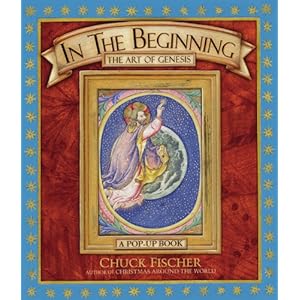
It depicts the stories from Genesis: the creation, the Garden of Eden, Noah and the Ark, the Tower of Babel, Jacob's dream of the ladder to heaven, and Joseph in Egypt. The artwork is beautiful and the information is overwhelming honestly. It has fold out books that discuss the artwork on the page, as well as other famous works of the same story. It also has background information into that story of the Bible, with verses and summarizes of the book. We have not been able to explore it completely because its for a maturer level than Willem at his 3-almost-4 years of age.
He has been getting a great deal of out of it, however.
Tonight, we looked at it for scripture study and I discovered that its the best scripture study I've experienced with him. Its 3-D, its concrete, visual, tactile, truly perfect for young cognition.
While looking at the page for the creation, Willem picked which days he wanted to read about. Under each pop-up image of the day, there is a tab you can pull out to read the verses from Genesis. Tonight, he chose separating the light from the darkness and the creation of the animals. When reading about the greater and lesser lights, we asked him if he knew what that meant.
Me: "What does 'the greater light to rule the day' mean? What is that?"
Willem: The Sun
Me: "What does 'the lesser light to rule the night' mean? What is that?"
Willem: The Moon
How's that for language arts and beginning to understand metaphor!
Next on the page for the Garden of Eden, we asked what the story was about and he tried to explain that it was something about eating the fruit. That's a good start. I asked him if he knew what would happen if they ate the fruit, he didn't know so we talked about what the phrase "and ye shall surely die" means. I told him that I don't think it means that Adam and Eve would die instantly after eating the fruit. Its not like it was going to make them sick and kill them, but that it meant that they would leave the garden and be subject to mortality. They would live, learn, grow old and die as a consequence of eating the fruit.
I asked him which one he would pick: Would he eat the fruit and leave the garden or would he want to stay?
Such a proud mommy moment when he said he would choose to eat the fruit to leave the garden. My son would make the courageous choice that Eve made!
I then asked him what choice he thought Adam made. Did Adam eat the fruit so he could stay with Eve or did he stay? He got that answer wrong but we were then able to explain how Adam did the best he could to be obedient to God's commandment so he chose to eat the fruit to stay with Eve. He chose to break one commandment in order to keep another, otherwise, Eve would have been alone in the world and that's not the way to make babies...
But my favorite part was when we came to the page with the Tower of Bable. He started telling my husband the story of how the people built the tower to get close to God and then he said, "But they didn't need to build a tower, they needed to pray to God."
My husband and I beamed at each other on that one. I then asked a question that I was hesitant to ask because I really didn't want him to feel led into answering a certain way, but I felt it was right to ask and I also know that he's so without guile that he will answer honestly. I asked him if he felt that he was close to God when he prays and he said yes.
This is progress because I have asked at other times and bore my testimony to him of prayer on other occasions and in the past he has seemed skeptical. I have been careful to not force my beliefs on him or to expect certain answers but to encourage him to be honest with me about what he feels is right. I hope this is an example of that.
I want more than anything for the Spirit to teach him and not for him to learn the "right" answers by parroting what we say or teach him. And so often, the challenge for that with young child is through teaching in a developmentally appropriate manner. It is very hard to teach in the way that children learn abstract concepts like God, Spirit and the past. If its not right here, right now, in front of them in a way they can touch and interact with, it will be difficult for them to learn and understand. That is my biggest challenge as a mother and a preschool teacher teaching the gospel to my young children and any time I can find something that is meets that criteria, I am happy for it.
This also seems like a good time to mention this set that I have seen: a fantastic bible felt board set with 600 peices or something. Willem is almost the age where this would be a great resource for Family Home Evenings and reading the Bible as a family for scripture study. If only there was a set for the Book of Mormon...
Subscribe to:
Posts (Atom)


