Showing posts with label gospel. Show all posts
Showing posts with label gospel. Show all posts
Monday, August 29, 2011

Friday, June 17, 2011
Oh no he didn't: Taking GA's literally
I really think that Orson F. Whitney is saying it is in God's plan for some people to not join the church is this life in the following quote:
I'm not arguing with this quote. In fact, I love it. It shows the depths of understanding that certain people through history have had regarding the gospel. This is evidence to me that the Mormon cultural hang-ups on conversion and ordinances need not be tied to life. The same blessings are available to those who die not having become a Mormon. Not just those who didn't ever hear of the gospel, but also to those who for some "wise purpose" do not feel convicted to be baptized into the church. What an Open Mormon concept. The whole exclusivity claims and some of the overt pressure, and judgement shown to many people is just unnecessary. This is another win for the universalist view of Mormonism, the one that says that Mormon theology provides for ordinance requirements of all people and the limited amount of time on earth is but a small factor that goes into how one is judged as either good or bad, righteous or unrighteous. Likely there will be more people in the celestial kingdom that perhaps your everyday Mormon believes.
Upon reading this quote, it occurred to me that this is just the type of quote that would have your conservative TBMs saying, "Oh well, you can't take everything said by a GA in Conference as scripture." (Even though this is the group that throws the same argument back in the faces of the unorthodox, questioning Mormons). That is precisely the arguments open Mormons when they encounter who are then denounced for their lack of obedience to the prophets. All I'm saying, there is plenty of content in the span of General Conference to make TBMs and OMs uncomfortable or that will lend support to their views.
The arguments are silly. Christ says love. The prophet of the restoration says "We claim the privilege of worshiping Almighty God according to the dictates of our own conscience and allow men the same privilege, let them worship how, where, or what they may." (Article of Faith 11). The prophet of today says be tolerant. Let's do that.
"Perhaps the Lord needs such men on the outside of His Church to help it along,” said the late Elder Orson F. Whitney of the Quorum of the Twelve. “They are among its auxiliaries, and can do more good for the cause where the Lord has placed them, than anywhere else. … Hence, some are drawn into the fold and receive a testimony of the truth; while others remain unconverted … the beauties and glories of the gospel being veiled temporarily from their view, for a wise purpose. The Lord will open their eyes in His own due time. God is using more than one people for the accomplishment of His great and marvelous work. The Latter-day Saints cannot do it all. It is too vast, too arduous for any one people. … We have no quarrel with the Gentiles. They are our partners in a certain sense.” (Conference Report, April 1928, p. 59.)
I'm not arguing with this quote. In fact, I love it. It shows the depths of understanding that certain people through history have had regarding the gospel. This is evidence to me that the Mormon cultural hang-ups on conversion and ordinances need not be tied to life. The same blessings are available to those who die not having become a Mormon. Not just those who didn't ever hear of the gospel, but also to those who for some "wise purpose" do not feel convicted to be baptized into the church. What an Open Mormon concept. The whole exclusivity claims and some of the overt pressure, and judgement shown to many people is just unnecessary. This is another win for the universalist view of Mormonism, the one that says that Mormon theology provides for ordinance requirements of all people and the limited amount of time on earth is but a small factor that goes into how one is judged as either good or bad, righteous or unrighteous. Likely there will be more people in the celestial kingdom that perhaps your everyday Mormon believes.
Upon reading this quote, it occurred to me that this is just the type of quote that would have your conservative TBMs saying, "Oh well, you can't take everything said by a GA in Conference as scripture." (Even though this is the group that throws the same argument back in the faces of the unorthodox, questioning Mormons). That is precisely the arguments open Mormons when they encounter who are then denounced for their lack of obedience to the prophets. All I'm saying, there is plenty of content in the span of General Conference to make TBMs and OMs uncomfortable or that will lend support to their views.
The arguments are silly. Christ says love. The prophet of the restoration says "We claim the privilege of worshiping Almighty God according to the dictates of our own conscience and allow men the same privilege, let them worship how, where, or what they may." (Article of Faith 11). The prophet of today says be tolerant. Let's do that.
Wednesday, May 18, 2011
What I wish I heard: May 15th
Sunday school: The lesson was on faith from the Gospel Principles Manual.
Non-member asked: why faith ingests? Why not God? My thought: that's a good question, a really good question, What I wish I heard: quoting Jesus, love God
What I said: he turns our attention to God. In all his teachings he said: follow me and the way to follow my example is to love God. What i'm glad I heard: Another woman in the class referenced the 1st article of faith "we believe in God" with emphasis on we believe in God first before Christ.
What I heard: how to increase faith in God, study scriptures, go to church, act
What was missing: prayer was missing and that was a glaring omission
What I said: that prayer needs to be included because its an essential part to having faith in God is to develop a personal relationship through prayer. I later thought how prayer needs to be coupled with seeking revealed truth from sources already given. One without the other is not effective but both need to work together. Answers to prayers aren't given if its already written now and accessible to a person but that person refuses to seek it out and rather prayers for it through inspiration.
What I heard in Relief Society
Hymn: 273 truth reflects upon our senses, Eliza r snow
What I wish I heard: the last two verses sung, insight into the imperfect view we have of others, judge not
What I am so glad i heard in a lesson on honesty: an attack on white lies, not defense of them
What I heard: a story of a white lie told. Woman told how her son lied to someone when he said he loved plays, but it was not true. Then the person who was told the lie spoke up and said that she was the one lied to. Hilarious!
What I'm glad I heard: taking more than what we need takes from other is a form of theft and dishonestly, specifically mentioning over-consumptionWhat I wish I heard: More about the injustice present in the world when so many have more than enough and even more do not have enough. Would have loved to hear The Life You Can Save mentioned.
What I heard: gospel principles definition of cheating- workforce issues, injustice against employees What I said: we have a role in standing up against that injustice and there are many opportunities to add our voice in opposition, consumer advocacy groups, workers rights. The internet provides some really effective, quick and easy ways of contacting legislators through organizations like Change.org, MomsRising, etc. What I wish I heard: recognition that women aren't likely to be in the role of the dishonest and oppressive employers because 1) Mormon women are discouraged from being in the work force and generally when they are in the work force are in low-paying, jobs required little skill and training and are not likely to be in leadership/corporate roles.
What I heard: people focusing fear of damnation for slight actions
What I wish I heard: people stating a balance of faith in repentance, desire to do the right thing, recognize the damage done to ourselves rather than focus on external punishments. Do some Mormons really believe that hell is an external punishment rather than the manifestations of our own conscience holding us accountable?
What I heard: hymn Oh Say What is Truth, last verse, loved it.
What I wish I heard: a talk on the transcendence of truth, maybe a blog post? Anyone know of a good article on this topic?
Friday, May 6, 2011
What will they say about me when I die?
I am lifting the following exercise from a recent post on Feminist Mormon Housewives. A new self-help book aiming to assist people of my generation to find their purpose in life provided the exercise. What follows are my answers:
1. She was a seeker of truth and was open-minded, and respectful in the finding of it. She embraced the belief in the gospel that all good things come from God and that all truth can be circumscribed into one great whole. She would embrace truth, quite literally, wherever it could be found--in Islam, Unitarian Universalism, Paganism, Gnosticism, Physics, Astronomy and Chemistry. She was a student of life and found great joy in it.
2. She wanted to make a difference in the world and she worked diligently to address some of the injustices and inequalities that people, especially women throughout the world face. Her involvement in non-profit organizations and humanitarian works helped the lives of many. One of the things she was fond of saying was that she didn't want to make a difference in the life of a child, but she wanted to make a difference in the life of many. She worked at the systems level to address the root causes of poverty, abuse and barriers to living a full and happy life.
3. She prioritized her family while at the same time set the example to them to be anxiously engaged in a good cause (or in her case, many). Her children were involved with her and shared her with the people of the world. They had the opportunity to see and do many things that provided service to others because of the example and encouragement of their mother. She was actively involved with them at all levels of their lives and somehow found a balance in the limited hours of each day to show them they were loved and benefited from her presence and involvement in their lives.
4. She was a believer in the radical Jesus: the Jesus who was friends with the sinners and who was compassionate to their experiences, the socialist who believed in complete redistribution of wealth, the empowerment and equality of women and the Christ-like love that each person needs to achieve their potential.
5. She knew hardship, difficulty, pain and injustice and she was able to find strength from her experiences and turn them around to be compassionate towards others, to support and comfort them.
Maybe I already did this up above. Just pulling from there, we find that I value: openness to truth/goodness, compassion, advocacy, social justice and idealism.
I'm already doing many of the things I hope to be remembered for so my purpose is described above. Involvement in Solace for Mothers, LDS WAVE, The Coalition for Improving Maternity Services already address some of those values that I hold so deeply. I would someday like to turn those desires and abilities into paid employment and I hope that it will be doing something that addresses the root causes of injustice in the world. I would love to work in humanitarian aid (whether it is at the local, national or global scene) but at the systems level. One of my skills is to look at big picture and see ways to build coalitions and to bring people together, to create ways that people from very different viewpoints can interface with each other in cooperative ways. Most of my efforts are somehow related to system building and connecting people in large communities to harness their combined power into a stronger more unified voice.
Today my purpose will be two fold:
1) to connect with my children and show them the value of caring for others
2) learn about how to structure my family economically so we can be Equal Shared Parenting and Radical Homemaking folks.
To accomplish that I will use my gifts for being involved in national organizations and reading to accomplish these specific goals:
1) I will walk with my children in the March of Dimes walk, teach them to sew and make things we can sell on Talents of Sisters.
2) start reading the book Equally Shared Parenting and discuss with my husband the possibilities that our interests lead us to.
Otherwise, I would say that my goals are year long, or at the very least, seasonal. This year I hope to create an online community for birth advocates that can become a hub for the thousands who care birth issues in our world. This season, we hope to grow some of our own food and make some of our own household products to develop our skills and save money.
My five core values are openness to truth/goodness, compassion, advocacy, social justice and idealism.
My five core talents are:
1) building community and cooperation around advocacy efforts
2) addressing root causes of social issues
3) looking at the big picture
4) being respectful and open to differing view points
5) embracing and valuing the good that is inherent in differing perspectives
In the next ten years my purpose will be to:
1) achieve equal partnership in my marriage
2) find paid part-time employment in advocacy work
3) support and contribute to organizations addressing global poverty
4) continue to develop current advocacy organizations
5) educate my children through experiential learning in living the gospel of the radical Jesus.
The key features of my personal mission statement are make a difference in the world, aspire to the ideal, encourage potential, and value balance and compassion to oneself and others.
Thought Experiment: You’ve died. You are at your own funeral. What do you want your friends and family to say about you? What did you do with your life? Write down five things you hope people say about the legacy that you’ve left. Write down five things you hope people say about your personality.
1. She was a seeker of truth and was open-minded, and respectful in the finding of it. She embraced the belief in the gospel that all good things come from God and that all truth can be circumscribed into one great whole. She would embrace truth, quite literally, wherever it could be found--in Islam, Unitarian Universalism, Paganism, Gnosticism, Physics, Astronomy and Chemistry. She was a student of life and found great joy in it.
2. She wanted to make a difference in the world and she worked diligently to address some of the injustices and inequalities that people, especially women throughout the world face. Her involvement in non-profit organizations and humanitarian works helped the lives of many. One of the things she was fond of saying was that she didn't want to make a difference in the life of a child, but she wanted to make a difference in the life of many. She worked at the systems level to address the root causes of poverty, abuse and barriers to living a full and happy life.
3. She prioritized her family while at the same time set the example to them to be anxiously engaged in a good cause (or in her case, many). Her children were involved with her and shared her with the people of the world. They had the opportunity to see and do many things that provided service to others because of the example and encouragement of their mother. She was actively involved with them at all levels of their lives and somehow found a balance in the limited hours of each day to show them they were loved and benefited from her presence and involvement in their lives.
4. She was a believer in the radical Jesus: the Jesus who was friends with the sinners and who was compassionate to their experiences, the socialist who believed in complete redistribution of wealth, the empowerment and equality of women and the Christ-like love that each person needs to achieve their potential.
5. She knew hardship, difficulty, pain and injustice and she was able to find strength from her experiences and turn them around to be compassionate towards others, to support and comfort them.
Core Values: Discover what drives you. What principles guide your actions and ideal self? Try to strip away all cultural conditioning and/or religious rhetoric and assess five core values by which you live your life and inform who you want to be. Write these down. Evaluate if there any disconnect between what you wrote down in step one and step two.
Maybe I already did this up above. Just pulling from there, we find that I value: openness to truth/goodness, compassion, advocacy, social justice and idealism.
Find Your Purpose: Why does what you are doing matter? What motivates and inspires you to keep following these values? Chose a purpose. It can be big or small, but has to be intentional. It is the reason for your goals and can change over time. If you are struggling to find your purpose try this experiment. Write down your five most valuable gifts and talents. Next, write below those what each of these can be used for. Finally, evaluate what types of careers or activities you would enjoy that would utilize some of these talents.
I'm already doing many of the things I hope to be remembered for so my purpose is described above. Involvement in Solace for Mothers, LDS WAVE, The Coalition for Improving Maternity Services already address some of those values that I hold so deeply. I would someday like to turn those desires and abilities into paid employment and I hope that it will be doing something that addresses the root causes of injustice in the world. I would love to work in humanitarian aid (whether it is at the local, national or global scene) but at the systems level. One of my skills is to look at big picture and see ways to build coalitions and to bring people together, to create ways that people from very different viewpoints can interface with each other in cooperative ways. Most of my efforts are somehow related to system building and connecting people in large communities to harness their combined power into a stronger more unified voice.
Test Your Purpose: Today my purpose will be _____________. To accomplish that I will use my gifts for ________________ to accomplish these specific goals_______________. Later change the timeline to week, month, and year.
Today my purpose will be two fold:
1) to connect with my children and show them the value of caring for others
2) learn about how to structure my family economically so we can be Equal Shared Parenting and Radical Homemaking folks.
To accomplish that I will use my gifts for being involved in national organizations and reading to accomplish these specific goals:
1) I will walk with my children in the March of Dimes walk, teach them to sew and make things we can sell on Talents of Sisters.
2) start reading the book Equally Shared Parenting and discuss with my husband the possibilities that our interests lead us to.
Otherwise, I would say that my goals are year long, or at the very least, seasonal. This year I hope to create an online community for birth advocates that can become a hub for the thousands who care birth issues in our world. This season, we hope to grow some of our own food and make some of our own household products to develop our skills and save money.
Write It All Down: Once you have a purpose you can stick with, write it all down and it will remind your of who you are and what you want to be. I.e.My five core values are ____________. My five core talents are ______________. In the next ten years my purpose will be ______________. The key features of my personal mission statement are ______________.
My five core values are openness to truth/goodness, compassion, advocacy, social justice and idealism.
My five core talents are:
1) building community and cooperation around advocacy efforts
2) addressing root causes of social issues
3) looking at the big picture
4) being respectful and open to differing view points
5) embracing and valuing the good that is inherent in differing perspectives
In the next ten years my purpose will be to:
1) achieve equal partnership in my marriage
2) find paid part-time employment in advocacy work
3) support and contribute to organizations addressing global poverty
4) continue to develop current advocacy organizations
5) educate my children through experiential learning in living the gospel of the radical Jesus.
The key features of my personal mission statement are make a difference in the world, aspire to the ideal, encourage potential, and value balance and compassion to oneself and others.
Monday, January 24, 2011
Needing the gospel to be simple
The gospel is simple for those who need it to be but expansive, complex and awesomely thought-provoking for those who don't need it to be. The people who need to get by with the gospel in terms of scripture stories, parables and being commanded in all things still make it through this life having accomplished what it is they set out to do. And that works for them. Its good for them. I think of the phrase in the Word of Wisdom "adapted to the capacity of the weak and the weakest of all saints." If that's all they can handle, then its a good thing that there is a program that works for them. Quite honestly, the church is best at this program for these members.
Its not so good at what I call the underbelly and that's where I find myself. A friend once suggested that to me that HF/HM want and need Sunstone/Dialouge/JMHA/Mormon Stories, etc. to exist because it provides the outlet and "meat of the gospel" for those who need it. In that way, there is enough of what each group needs.
The only problem comes when the Butter Side Up and the Butter Side Down people (name that reference for 1,000 points) get on persecuting and harshly judging each other. Often it comes from feeling threatening and a perception that the "other" is thinking negatively about self and then people start jumping to defensiveness and criticism which are two of the horsemen of the apocalypse (according to marriage researcher John Gottman).
I'm happy to live and let live for the people who need the gospel to be simple, *IF* they can allow me the same respect.
We here have obviously taken the blue pill (I think the gospel=simple folks took the red pill because they are stopped in their understanding) and we have very valid concerns that we will not be treated respectfully and kindly by those who live the gospel differently than we do. We after all have the memory of excommunications for apostasy because of others' earnest desires to seek and know.
I don't exactly understand why the gospel=simple people are SO defensive and protective of their stance and why they find us so threatening. Maybe its hard enough as it is for them that the thought of something harder is unbearable?
This is kind of my thoughts taking a turn but I'll just make this case for those of us who are here: if the plan really is to be able to create, lead and sustain our own worlds, we are going to need to know and understand a great deal more than what the 72 correlated points teach us. The way I see it, those who seek the mysteries of the gospel and aim to understand the complexities are getting some progressing done here on the earth that for the gospel=simple folks is saved for much later. At point, they are going to have to mature in their thinking and understanding. But it is going to have to be on their own time, in a way that God knows best.
Its not fair for us to force it (thinking: "for it is not requisite that a man should run faster than he has strength" Mosiah 4:27) but at the same time I do believe there can be more balance, respect and openness at church for all of us to fit there. There may be times that we can introduce some of our ideas in a way that does not inflame them and I would guess that the Spirit would be able to enlighten us at those times and with the right words.
Want to try an experiment where those of us who attend church pray to know the right words/timing to say something that is near and dear to our hearts? And then report here when it happens....
Its not so good at what I call the underbelly and that's where I find myself. A friend once suggested that to me that HF/HM want and need Sunstone/Dialouge/JMHA/Mormon Stories, etc. to exist because it provides the outlet and "meat of the gospel" for those who need it. In that way, there is enough of what each group needs.
The only problem comes when the Butter Side Up and the Butter Side Down people (name that reference for 1,000 points) get on persecuting and harshly judging each other. Often it comes from feeling threatening and a perception that the "other" is thinking negatively about self and then people start jumping to defensiveness and criticism which are two of the horsemen of the apocalypse (according to marriage researcher John Gottman).
I'm happy to live and let live for the people who need the gospel to be simple, *IF* they can allow me the same respect.
We here have obviously taken the blue pill (I think the gospel=simple folks took the red pill because they are stopped in their understanding) and we have very valid concerns that we will not be treated respectfully and kindly by those who live the gospel differently than we do. We after all have the memory of excommunications for apostasy because of others' earnest desires to seek and know.
I don't exactly understand why the gospel=simple people are SO defensive and protective of their stance and why they find us so threatening. Maybe its hard enough as it is for them that the thought of something harder is unbearable?
This is kind of my thoughts taking a turn but I'll just make this case for those of us who are here: if the plan really is to be able to create, lead and sustain our own worlds, we are going to need to know and understand a great deal more than what the 72 correlated points teach us. The way I see it, those who seek the mysteries of the gospel and aim to understand the complexities are getting some progressing done here on the earth that for the gospel=simple folks is saved for much later. At point, they are going to have to mature in their thinking and understanding. But it is going to have to be on their own time, in a way that God knows best.
Its not fair for us to force it (thinking: "for it is not requisite that a man should run faster than he has strength" Mosiah 4:27) but at the same time I do believe there can be more balance, respect and openness at church for all of us to fit there. There may be times that we can introduce some of our ideas in a way that does not inflame them and I would guess that the Spirit would be able to enlighten us at those times and with the right words.
Want to try an experiment where those of us who attend church pray to know the right words/timing to say something that is near and dear to our hearts? And then report here when it happens....
Saturday, January 15, 2011
There's scripture study and then there is this...
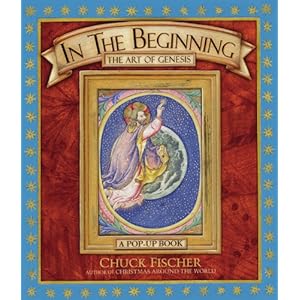
It depicts the stories from Genesis: the creation, the Garden of Eden, Noah and the Ark, the Tower of Babel, Jacob's dream of the ladder to heaven, and Joseph in Egypt. The artwork is beautiful and the information is overwhelming honestly. It has fold out books that discuss the artwork on the page, as well as other famous works of the same story. It also has background information into that story of the Bible, with verses and summarizes of the book. We have not been able to explore it completely because its for a maturer level than Willem at his 3-almost-4 years of age.
He has been getting a great deal of out of it, however.
Tonight, we looked at it for scripture study and I discovered that its the best scripture study I've experienced with him. Its 3-D, its concrete, visual, tactile, truly perfect for young cognition.
While looking at the page for the creation, Willem picked which days he wanted to read about. Under each pop-up image of the day, there is a tab you can pull out to read the verses from Genesis. Tonight, he chose separating the light from the darkness and the creation of the animals. When reading about the greater and lesser lights, we asked him if he knew what that meant.
Me: "What does 'the greater light to rule the day' mean? What is that?"
Willem: The Sun
Me: "What does 'the lesser light to rule the night' mean? What is that?"
Willem: The Moon
How's that for language arts and beginning to understand metaphor!
Next on the page for the Garden of Eden, we asked what the story was about and he tried to explain that it was something about eating the fruit. That's a good start. I asked him if he knew what would happen if they ate the fruit, he didn't know so we talked about what the phrase "and ye shall surely die" means. I told him that I don't think it means that Adam and Eve would die instantly after eating the fruit. Its not like it was going to make them sick and kill them, but that it meant that they would leave the garden and be subject to mortality. They would live, learn, grow old and die as a consequence of eating the fruit.
I asked him which one he would pick: Would he eat the fruit and leave the garden or would he want to stay?
Such a proud mommy moment when he said he would choose to eat the fruit to leave the garden. My son would make the courageous choice that Eve made!
I then asked him what choice he thought Adam made. Did Adam eat the fruit so he could stay with Eve or did he stay? He got that answer wrong but we were then able to explain how Adam did the best he could to be obedient to God's commandment so he chose to eat the fruit to stay with Eve. He chose to break one commandment in order to keep another, otherwise, Eve would have been alone in the world and that's not the way to make babies...
But my favorite part was when we came to the page with the Tower of Bable. He started telling my husband the story of how the people built the tower to get close to God and then he said, "But they didn't need to build a tower, they needed to pray to God."
My husband and I beamed at each other on that one. I then asked a question that I was hesitant to ask because I really didn't want him to feel led into answering a certain way, but I felt it was right to ask and I also know that he's so without guile that he will answer honestly. I asked him if he felt that he was close to God when he prays and he said yes.
This is progress because I have asked at other times and bore my testimony to him of prayer on other occasions and in the past he has seemed skeptical. I have been careful to not force my beliefs on him or to expect certain answers but to encourage him to be honest with me about what he feels is right. I hope this is an example of that.
I want more than anything for the Spirit to teach him and not for him to learn the "right" answers by parroting what we say or teach him. And so often, the challenge for that with young child is through teaching in a developmentally appropriate manner. It is very hard to teach in the way that children learn abstract concepts like God, Spirit and the past. If its not right here, right now, in front of them in a way they can touch and interact with, it will be difficult for them to learn and understand. That is my biggest challenge as a mother and a preschool teacher teaching the gospel to my young children and any time I can find something that is meets that criteria, I am happy for it.
This also seems like a good time to mention this set that I have seen: a fantastic bible felt board set with 600 peices or something. Willem is almost the age where this would be a great resource for Family Home Evenings and reading the Bible as a family for scripture study. If only there was a set for the Book of Mormon...
Tuesday, August 10, 2010
PTSD after childbirth: A Period of Adversity
My faith has been strengthened by my son's birth that was so traumatic for me. First I quickly realized that my experience giving birth, and the PTSD that followed was another period of adversity in my life.
I have found that generally when I make a momentous, good decision that some difficult adversity comes along to try to mess it up. I realized quickly that this was another one of those times in my life. By becoming a mother, I probably did the most important thing I'll do in my life; with the most potential to really make a difference in the world. I became responsible for a human life, and ultimately to give him the shape and direction that he needs to become a good person. One time somebody taught me that Satan doesn't try and tempt those who are aren't trying to live God's law. Satan doesn't have to try with them because they're already doing what he wants. On the other hand, those who are striving and doing right and good things with their lives, he going to work hardest on them and try to destroy and interfere with their efforts. I recognized that was occurring to me. I tend to get mad at Satan when I realize that's happening because there's no way I'm going to let the enemy of righteousness do that to me. I know its not my Father in Heaven doing it to me, but the influence of evil and the intent to cause sadness in the world.
I see Satan try to use maternity care to abuse and traumatize mothers. Providers so commonly violate a mother's right to give permission to what people are doing to her body, she is manipulated, coerced, threatened and ignored when she tries to stop it. I even see inappropriate and unnecessary use of technology and intervention during birth as "trusting in the arm of flesh" instead of trusting in God's creation and the body's ability to birth a baby safely. Interfering with the process of childbirth is, how I see it, another way that Satan interferes in the happy and healthy development of families. Families are of the utmost importance to the development and well-being of children. Heavenly Father created families because he knew thats what benefits children most--no other societal organization can do what parents do. Satan would love nothing more than to see mothers so traumatized that they commit suicide, or divorce their partners or abuse their children or fail to form healthy attachment to their children. He most especially doesn't want more people born into the world so he tries to scare mothers away from having more children.
Because I believe that God and Jesus "know the end from the beginning" I know that they know what I'm experiencing and how emotionally damaging that birth was for me. They know the wrongs committed by the staff people and understand better than I do the injustice inherent in the system. I don't believe they safe us from all suffering because everyone has their free will. There will always be people who choose to wield power in an abusive and destructive way. I was a victim of that and because I experienced it I learned that traumatic birth experiences are another destructive attack on families and God's children. I probably wouldn't have believed it if it hadn't happened to me.
But now that I have experienced it and suffered it and know it, I have 1) gained that knowledge, 2) developed empathy and compassion for mothers who have experienced similar trauma, as well as anyone who has been abused, or traumatized by a life event, 3) become more sensitive as a parent because I try not to force physically or manipulate my children when teaching them because I know how awful it feels and 4) realize that I have the opportunity to do something about it (obsessively, actually, a side effect of the PTSD). When I was seeking help in dealing with my experience, I didn't find the resources I felt I needed. But then I felt led in my searching to meet the founder of Solace, and Jennica and together we created this discussion board and are developing Solace as a advocacy and support organization for birth trauma. I believe that there is good coming out of it because it is a comfort for other mothers who have experienced birth trauma. In that way, my experience has and can help others.
I have grown very much from the experience. Not only are my work skills being improved because I'm learning how to direct a non-profit, but I've learned about the process of birth. I believe that the human body was originally created to work flawlessly. Since the introduction of less than perfect circumstance with the Fall of Adam, the body doesn't work perfectly all the time, but it works most of the time. And it works best when we trust in it and let nature do what its meant to do WITHOUT the interference of others (I think of Proverbs 3:4). Sometimes HF will guide us to those who have the skills to intervene when the process derails, but the people with those skills tend to over-inflate their value and necessity. I learned that HF wants me to take responsibility for my decisions and trust Him first and then let him guide me to know when to make use of man's knowledge and expertise. Just as any tool, it can be misused.
I have found that generally when I make a momentous, good decision that some difficult adversity comes along to try to mess it up. I realized quickly that this was another one of those times in my life. By becoming a mother, I probably did the most important thing I'll do in my life; with the most potential to really make a difference in the world. I became responsible for a human life, and ultimately to give him the shape and direction that he needs to become a good person. One time somebody taught me that Satan doesn't try and tempt those who are aren't trying to live God's law. Satan doesn't have to try with them because they're already doing what he wants. On the other hand, those who are striving and doing right and good things with their lives, he going to work hardest on them and try to destroy and interfere with their efforts. I recognized that was occurring to me. I tend to get mad at Satan when I realize that's happening because there's no way I'm going to let the enemy of righteousness do that to me. I know its not my Father in Heaven doing it to me, but the influence of evil and the intent to cause sadness in the world.
I see Satan try to use maternity care to abuse and traumatize mothers. Providers so commonly violate a mother's right to give permission to what people are doing to her body, she is manipulated, coerced, threatened and ignored when she tries to stop it. I even see inappropriate and unnecessary use of technology and intervention during birth as "trusting in the arm of flesh" instead of trusting in God's creation and the body's ability to birth a baby safely. Interfering with the process of childbirth is, how I see it, another way that Satan interferes in the happy and healthy development of families. Families are of the utmost importance to the development and well-being of children. Heavenly Father created families because he knew thats what benefits children most--no other societal organization can do what parents do. Satan would love nothing more than to see mothers so traumatized that they commit suicide, or divorce their partners or abuse their children or fail to form healthy attachment to their children. He most especially doesn't want more people born into the world so he tries to scare mothers away from having more children.
Because I believe that God and Jesus "know the end from the beginning" I know that they know what I'm experiencing and how emotionally damaging that birth was for me. They know the wrongs committed by the staff people and understand better than I do the injustice inherent in the system. I don't believe they safe us from all suffering because everyone has their free will. There will always be people who choose to wield power in an abusive and destructive way. I was a victim of that and because I experienced it I learned that traumatic birth experiences are another destructive attack on families and God's children. I probably wouldn't have believed it if it hadn't happened to me.
But now that I have experienced it and suffered it and know it, I have 1) gained that knowledge, 2) developed empathy and compassion for mothers who have experienced similar trauma, as well as anyone who has been abused, or traumatized by a life event, 3) become more sensitive as a parent because I try not to force physically or manipulate my children when teaching them because I know how awful it feels and 4) realize that I have the opportunity to do something about it (obsessively, actually, a side effect of the PTSD). When I was seeking help in dealing with my experience, I didn't find the resources I felt I needed. But then I felt led in my searching to meet the founder of Solace, and Jennica and together we created this discussion board and are developing Solace as a advocacy and support organization for birth trauma. I believe that there is good coming out of it because it is a comfort for other mothers who have experienced birth trauma. In that way, my experience has and can help others.
I have grown very much from the experience. Not only are my work skills being improved because I'm learning how to direct a non-profit, but I've learned about the process of birth. I believe that the human body was originally created to work flawlessly. Since the introduction of less than perfect circumstance with the Fall of Adam, the body doesn't work perfectly all the time, but it works most of the time. And it works best when we trust in it and let nature do what its meant to do WITHOUT the interference of others (I think of Proverbs 3:4). Sometimes HF will guide us to those who have the skills to intervene when the process derails, but the people with those skills tend to over-inflate their value and necessity. I learned that HF wants me to take responsibility for my decisions and trust Him first and then let him guide me to know when to make use of man's knowledge and expertise. Just as any tool, it can be misused.
Sunday, June 27, 2010
If you could choose
Lay aside your current beliefs. Try to be open-minded. Think critically. Be fair. Try to think like God. If God were a loving God, how would the plan go? If you were God and wanted to make a world that was fair and good and right for all people in it, how would you do it?
1. God would be....
1. God would be....
- Male
- Female
- Neither, a spirit
- Male and female, separate beings but one in equal partnership
- Nothing, no god
2. The afterlife would be...
- Nothing, just death
- Heaven and Hell
- Levels depending on a person's relative goodness
- everyone all together, no separation from each other, like in life
- everyone is "saved" and is happy
3. Marriage and families after death would be...
- 'til death do you part, not with your spouse and children from the earth
- forever, with your spouse and children from life if you chose to remain with him/her
- can be forever if you have a shared affinity with each other
4. Ordinances/ sacraments (baptism, etc) are...
- optional for salvation
- required for salvation
- not necessary for salvation
- nice ceremonies and have nothing to do with salvation
5. Any ordinances...
- must be done in this life
- are not necessary in the life
- can be done on behalf of a person if they were unable to obtain them in this life
6. God's church on the earth should be led by:
- paid clergy who pursue church leadership as a career
- a person or people who decide to start their own religion
- apostles, prophets called by God
- people elected from the church body
7. The purpose of life is...
- a joke
- meaningless
- to be good to others and be happy and then we die
- to worship God
- to become like God
8. The effects of sin (wrongdoing)...
- are limited to this life
- demand justice so therefore cannot be forgiven
- repentance is possible through one's own efforts
- repentance requires an intermediary to take away the effects of sin
- there is no sin
9. The end result of all this is...
- a world that comes to its end through laws of nature
- people who have lived on the earth obtain God's knowledge and power
- people worship God forever as angels
- people become one with God by their spirits combining
- nothingness
10. Revelation and miracles...
- are no longer necessary
- are only for church leaders
- are available to anyone who asks in faith
- are only for God's chosen people
- are not real
11. The best church to join is....
- a source of community and a place to share spirituality
- people's best attempt at recreating the church that Christ set up
- whichever you feel most comfortable in
- God's vehicle for communicating his will and organizing his kingdom on the earth
- there's no such thing
12. Christ was/is...
- a wise teacher
- a heretic who claimed to be God
- a false prophet
- who he says he is
13. God is...
- a general sense of goodness, love and beauty that permeates everything
- angry and vengeful
- the perfect parent
- a benign presence in the universe
14. Christ's suffering and death was...
- a blood sacrifice
- the result of his delusions
- vicarious suffering for the effects of our sins so we could be free of them
- unimportant to the world and to us as individuals
15. People can act in God's name:
- whenever they feels like it
- when church leaders give them that authority
- when God inspires them to act
- when God confers that authority on them
If you chose:
- God should be male and female
- where a person goes in the afterlife depends on a person's relative goodness,
- families can be together forever
- God has instituted some essential ordinances for salvation but provides a way for them to be accomplished if they are not obtained in this life
- God's church on the earth should be led by apostles and prophets
- the purpose of life is to become like God
- repentance from sin is possible with an intermediary
- people who have lived on the earth gain God's knowledge and power (thereby becoming like God)
- revelation and miracles are available to all those who ask in faith
- the best church to join is led and directed by God
- Christ is who he says he is and that his suffering and death was an act performed vicariously for each person on the earth to have the spiritual effects of his/her sins taken away
- God is the perfect parent and gives people power to act in God's name like a parent who gives their child responsibility and they learn.
Then, you would probably be very interested to know that these doctrines are taught by the Church of Jesus Christ of Latter-day Saints. If you have questions about the LDS Church answered at mormon.org or by contacting the local LDS missionaries at LDS church buildings on Sundays.
I found that this set of doctrines and beliefs were unique to the LDS Church (often called Mormon) and was impressed at the fairness and completeness of their teachings. I felt like everyone was covered and if a person (like the many billions who have lived) had not learned and accepted the gospel, and had the correct ordinances performed, that they would not be lost or condemned to hell, not having had the chance to accept or reject it. To me, the LDS teachings are more logical and rational than what I had learned elsewhere; example: if God is our father and is male, don't we have a mother too?
When I was thinking about Christian churches, I felt that the right church for me had to possess certain beliefs that provided a means for salvation for all people. This list of questions is my attempt at summarizing the different views that are present in the world on the variety of topics I listed. It is by no means exhaustive. If you have want to add a topic to the list and have my suggest the various dominant world views on that topic, please suggest it to me in the comments.
Friday, June 4, 2010
Lesson Learned
My children are not my own.
President Gordon B. Hinckley said, “Never forget that these little ones are the sons and daughters of God and that yours is a custodial relationship to them, that he was a parent before you were parents and that he has not relinquished his parental rights or interest in these little ones."
"Though in mortality we may bear children with our bodies, and tend their bodies and spirits, the reality is that they are not our eternal increase--they are the Lord’s eternal increase." (Cassler-Square 2 article)
Duly noted.
And yet, through the new and everlasting covenant of marriage, I receive the promise of having "eternal increase" i.e "a continuation of the seeds forever and ever." (D&C 132:19) which is the promise that through becoming gods (vs 20), our children then become our own, not on loan to us through our Heavenly Parents but our own spiritual creation.
How sobering to learn that the children that have come forth from my body are more like my siblings--that's where that feeling as been coming from! Its not just because I'm an only child and never before had known what it was like for a young child to persistently need to interact and be near me. It will not be until I am a perfect being, a god, that my children will really be my own and it won't be the children who were born to me in this place. My Willem, my Belle will take their place next to me as equals as creators of their own worlds.
I may not really ever feel like my spiritually begotten children are entirely my own because like our heavenly parents have done with us and our earthly children, we would then give custody over to other parents who in reality are also our children.
Circle within circles. No human is ever really belonging to another person. Slavery, then cannot rightfully exist.
How then, if I reflect, do I feel like I really belong to my heavenly parents? Am I really theirs? Do they feel that I am really theirs since according to the pattern, they have granted my earthly parents the opportunity to tend to my development?
Does that lead me to feel that in a way, I am more equal and capable because I'm not eternally being viewed as a child, belonging to someone else? The mores of human and spiritual connection our there anchoring me to comfort and familiarity, but I stand independently as a spiritual entity, created and nurtured and buoyed up on many sides of existence as a spirit. Like my earthly children become equals to me, I become equal with God . They become equal with God.
We are all equals.
President Gordon B. Hinckley said, “Never forget that these little ones are the sons and daughters of God and that yours is a custodial relationship to them, that he was a parent before you were parents and that he has not relinquished his parental rights or interest in these little ones."
"Though in mortality we may bear children with our bodies, and tend their bodies and spirits, the reality is that they are not our eternal increase--they are the Lord’s eternal increase." (Cassler-Square 2 article)
Duly noted.
And yet, through the new and everlasting covenant of marriage, I receive the promise of having "eternal increase" i.e "a continuation of the seeds forever and ever." (D&C 132:19) which is the promise that through becoming gods (vs 20), our children then become our own, not on loan to us through our Heavenly Parents but our own spiritual creation.
How sobering to learn that the children that have come forth from my body are more like my siblings--that's where that feeling as been coming from! Its not just because I'm an only child and never before had known what it was like for a young child to persistently need to interact and be near me. It will not be until I am a perfect being, a god, that my children will really be my own and it won't be the children who were born to me in this place. My Willem, my Belle will take their place next to me as equals as creators of their own worlds.
I may not really ever feel like my spiritually begotten children are entirely my own because like our heavenly parents have done with us and our earthly children, we would then give custody over to other parents who in reality are also our children.
Circle within circles. No human is ever really belonging to another person. Slavery, then cannot rightfully exist.
How then, if I reflect, do I feel like I really belong to my heavenly parents? Am I really theirs? Do they feel that I am really theirs since according to the pattern, they have granted my earthly parents the opportunity to tend to my development?
Does that lead me to feel that in a way, I am more equal and capable because I'm not eternally being viewed as a child, belonging to someone else? The mores of human and spiritual connection our there anchoring me to comfort and familiarity, but I stand independently as a spiritual entity, created and nurtured and buoyed up on many sides of existence as a spirit. Like my earthly children become equals to me, I become equal with God . They become equal with God.
We are all equals.
Friday, August 22, 2008
Am I the Soil or the Seed?
Last night I attened a missionary lesson whereThe investigator shared with us an audio tape recording of man, I beleive a spiritual writer (non-LDS) speaking of the inherent potential of the seed, how it is what it is and does not aspire to be anything as it follows the path programmed into it. The investigator likened himself to the seed. He was therefore on a path that he would follow but not aspiring to reach the potential he had because it was inherent within him and that it would happen without his desiring or working for it to be so.
The missionaries then referred to the parable of the seed in Matthew 13 saying that if this man was the seed, that based on his actions and experiences that he could fall into ground that would either support his growth and learning or impede it. Since, as humans, we are not seeds but have our agency to choose for ourselves, we can decide where we will cast our seed, whether into dry stony ground where we will not grow or into rich verdant soil where we are able to meet our full potential.
The parable is as follows:
My visiting teacher accompanied me and the missionaries to this meeting. She said something that got me thinking. She had once been taught that maybe it is not the parable of the seed, but rather the parable of the soil.
For me it helps to break it down by the symbols. To me, and in the context of our conversation, the symbols are as follows:
As described above it could be interpreted differently where we are the seed, and the soil are the surroundings we choose to place ourselves in. Both interpretations provide useful spiritual lessons.
The lesson I got last night was that the word of God is what it is and will not change. It has the same potential for every person on this earth to change and lift their consciousness to be more perfect and like God. To me, that makes the word of God the seed. Whenever the word of God is shared or learned by another, it has same the potential to change the person's life with a knowledge of God's eternal plan for all earthly life.
Despite that the gospel has the same potential, it does not and will not always have the same likelihood of taking root and growing up within a person. Individuals, based on their thoughts, actions and words create the climate wherein that seed will attempt to grow. The hope is that all who hear will strive to be the good soil where the word of God will be nourished so it can grow and take root in that person's heart. But often a person's heart will be more like the stony ground where the seed will not be able to take dig deep root, or the thorny ground where the word will be choked out of that person's consciousness.
A person like unto the stony ground may not be interested in hearing the word taught to them, or may not want to be obligated to making the changes in his/her life that the gospel would necessitate. This is the person who does not want to know whether it is true or not for whatever reason.
A person who would be found in the thorny ground may be willing and interested in hearing the gospel preached to them, but other ideas, thoughts, activities may take their attention away from the learning process. It could be involvement in political, professional, social or religious organziations that keep a person too busy to nourish the word of God within their heart. They may be distracted by the world's meaningless activities or by the endless blare of the media.
As the only member in my family and the first in my group of friends to join the church, as well as being a ward missionary, I see that the majority of people who have the opportunity to learn of the gospel fall into the category of stony or thorny ground, while it is the minority who choose to provide the rich soil of their hearts for the nourishing of the word of God. I pray that more people in our country, society and world will be willing to nourish the word of God when it reaches their ears, that their hearts will be desirous to learn of it and experiment upon like Alma urges in the Book of Mormon.
The missionaries then referred to the parable of the seed in Matthew 13 saying that if this man was the seed, that based on his actions and experiences that he could fall into ground that would either support his growth and learning or impede it. Since, as humans, we are not seeds but have our agency to choose for ourselves, we can decide where we will cast our seed, whether into dry stony ground where we will not grow or into rich verdant soil where we are able to meet our full potential.
The parable is as follows:
3 And he spake many things unto them in parables, saying, Behold, a sower went forth to sow;
4 And when he sowed, some seeds fell by the way side, and the fowls came and devoured them up:
5 Some fell upon stony places, where they had not much earth: and forthwith they sprung up, because they had no deepness of earth:
6 And when the sun was up, they were scorched; and because they had no root, they withered away.
7 And some fell among thorns; and the thorns sprung up, and choked them:
8 But other fell into good ground, and abrought forth fruit, some an hundredfold, some sixtyfold, some thirtyfold.
9 Who hath ears to hear, let him hear.
My visiting teacher accompanied me and the missionaries to this meeting. She said something that got me thinking. She had once been taught that maybe it is not the parable of the seed, but rather the parable of the soil.
For me it helps to break it down by the symbols. To me, and in the context of our conversation, the symbols are as follows:
The sower: God
The seed: the word of God
The soil/sediment: our choices regarding how we nurture the word of God
As described above it could be interpreted differently where we are the seed, and the soil are the surroundings we choose to place ourselves in. Both interpretations provide useful spiritual lessons.
The lesson I got last night was that the word of God is what it is and will not change. It has the same potential for every person on this earth to change and lift their consciousness to be more perfect and like God. To me, that makes the word of God the seed. Whenever the word of God is shared or learned by another, it has same the potential to change the person's life with a knowledge of God's eternal plan for all earthly life.
Despite that the gospel has the same potential, it does not and will not always have the same likelihood of taking root and growing up within a person. Individuals, based on their thoughts, actions and words create the climate wherein that seed will attempt to grow. The hope is that all who hear will strive to be the good soil where the word of God will be nourished so it can grow and take root in that person's heart. But often a person's heart will be more like the stony ground where the seed will not be able to take dig deep root, or the thorny ground where the word will be choked out of that person's consciousness.
A person like unto the stony ground may not be interested in hearing the word taught to them, or may not want to be obligated to making the changes in his/her life that the gospel would necessitate. This is the person who does not want to know whether it is true or not for whatever reason.
A person who would be found in the thorny ground may be willing and interested in hearing the gospel preached to them, but other ideas, thoughts, activities may take their attention away from the learning process. It could be involvement in political, professional, social or religious organziations that keep a person too busy to nourish the word of God within their heart. They may be distracted by the world's meaningless activities or by the endless blare of the media.
As the only member in my family and the first in my group of friends to join the church, as well as being a ward missionary, I see that the majority of people who have the opportunity to learn of the gospel fall into the category of stony or thorny ground, while it is the minority who choose to provide the rich soil of their hearts for the nourishing of the word of God. I pray that more people in our country, society and world will be willing to nourish the word of God when it reaches their ears, that their hearts will be desirous to learn of it and experiment upon like Alma urges in the Book of Mormon.
Saturday, July 26, 2008
When Bad Things Happen to Good People
Last month, I was lucky to spend 3 weeks in Hawaii with my best friend from elementary school. She and I have remained friends through a number of hardships that both of us have experienced. Our friendship weathered my conversion to the LDS church, as she became more and more nonreligious.
During our trip together, we discussed some of the theological issues that we have considered. My friend's biggest question and concern about religion and theology was the question, "If God loves us so much, why does he let bad things happen to good people?" I sensed it wasn't the right time to launch into a discussion of the LDS answer to that question, but I offered to share an answer at a later time if she was interested.
After returning from our trip, I ran across a copy of the book "When Bad Things Happen to Good People" written by Harold S. Kushner, a Jewish Rabbi. He shares his personal theology on why there is suffering in this world and God's responses to it. A summary of his main points follows:
While I agree that Heavenly Father has the power to comfort and help us in times of suffering and grief (and I have been the recipient of that succor many times), my understandings of the doctrines of Latter-day Saint theology does not let me accept his explanations for the causes of human suffering.
Modern-day scripture reveals: "saints to learn obedience by the things they suffer (D&C 105:6)", "saints to reap eternal joy for all their suffering (D&C 109:76)", "know thy son that these things [afflictions] shall give thee experience and shall be for thy good (D&C 122:7)", "all things shall work together for your good (D&C 90:24, 98:3,100:15 and 105:40)", "God shall consecrate thine afflictions for thy gain (2 Nephi 2:2)", and "many are softened because of their affliction (D&C 62:41). These indicate that God indeed does intend that people will learn and be rewarded for their suffering.
I know that it has been through suffering that I have learned some of the most important lessons in life and I have benefited from them (my conversion story is evidence of that). But when in the midst of affliction and trial, I am not comforted by that knowledge of God's will and often I am very resentful. It comes "after the rain" that I can see the purpose of the suffering and reap the benefits of the lessons learned.
The Latter-day Saint scriptures also substantiate Kushner's claim others claims but those will have to be saved for another blog, another night.
This is a topic that I will continue to study and pray about seeking understanding to Heavenly Father's plan and purpose for suffering in this life. It is such a large topic that a book in response to Kushner's from the LDS perspective could be written, and I will be searching LDS publications to find one that fully discusses the topic, of which I'm sure there are quite a few.
During our trip together, we discussed some of the theological issues that we have considered. My friend's biggest question and concern about religion and theology was the question, "If God loves us so much, why does he let bad things happen to good people?" I sensed it wasn't the right time to launch into a discussion of the LDS answer to that question, but I offered to share an answer at a later time if she was interested.
After returning from our trip, I ran across a copy of the book "When Bad Things Happen to Good People" written by Harold S. Kushner, a Jewish Rabbi. He shares his personal theology on why there is suffering in this world and God's responses to it. A summary of his main points follows:
1) God is obligated and required to respect the moral freedom of man to choose. Therefore some people make bad choices which hurt and causes others to suffer. God cannot stop this suffering.
2)In the creation, God made order out of chaos but some chaos remains in this life. Therefore some human suffering happens as a result of chance--mere randomness. Maybe in time, the Spirit of God will bring order out of the chaos. Chaos is not the will of God but an aspect of reality that stands independent of His will.
3) Laws of nature are ordained by God and cause problems that lead to human suffering. Gravity makes people fall and get hurt. God does not cause these problem to happen and does not have the power to stop it.
According to Kushner, basically good people's suffering is not caused by God. It is not punishment for sins in this life (yours or your relatives). It is not to teach people to be better followers of God and it is not a test to see if his followers will be faithful. And ultimately, death is not intended in God's plan to liberate us from the suffering of this life.
Kushner's main point in the midst of his discussion is that no matter the cause of our suffering, it is God who offers us the help we need to deal with our suffering. The author testifies of that help that God gives.
While I agree that Heavenly Father has the power to comfort and help us in times of suffering and grief (and I have been the recipient of that succor many times), my understandings of the doctrines of Latter-day Saint theology does not let me accept his explanations for the causes of human suffering.
Modern-day scripture reveals: "saints to learn obedience by the things they suffer (D&C 105:6)", "saints to reap eternal joy for all their suffering (D&C 109:76)", "know thy son that these things [afflictions] shall give thee experience and shall be for thy good (D&C 122:7)", "all things shall work together for your good (D&C 90:24, 98:3,100:15 and 105:40)", "God shall consecrate thine afflictions for thy gain (2 Nephi 2:2)", and "many are softened because of their affliction (D&C 62:41). These indicate that God indeed does intend that people will learn and be rewarded for their suffering.
I know that it has been through suffering that I have learned some of the most important lessons in life and I have benefited from them (my conversion story is evidence of that). But when in the midst of affliction and trial, I am not comforted by that knowledge of God's will and often I am very resentful. It comes "after the rain" that I can see the purpose of the suffering and reap the benefits of the lessons learned.
The Latter-day Saint scriptures also substantiate Kushner's claim others claims but those will have to be saved for another blog, another night.
This is a topic that I will continue to study and pray about seeking understanding to Heavenly Father's plan and purpose for suffering in this life. It is such a large topic that a book in response to Kushner's from the LDS perspective could be written, and I will be searching LDS publications to find one that fully discusses the topic, of which I'm sure there are quite a few.
Monday, March 24, 2008
How I Came to Be Jenneology
I was introduced to the church of Jesus Christ of Latter-day Saints through my dad. He was a substitute teacher in the local school system and was told by one of his students about a show for a performing company for children and teenagers. I was hesitant to go because earlier that year my dad and I had had a falling out. I knew that this was his attempt at reconciliation. I am so glad that I went to that performance. I knew that I wanted to join the company and dance on stage with them. A few months later, I joined the group and found that the director, producer and many of the performers were LDS. At that point in my life, I was atheist attending the Unitarian Universalist Church so it was very difficult for me to comprehend my dad's death from a car accident just 6 weeks after joining the company. I became depressed, despondent and spent a year barely living each week. But I was in the perfect place to get my questions answered and to receive the consolation that I desperately needed. I needed to know that I would see my dad again, that the end of this life is not the end of existence and how I could be with my dad again. I started asking members of the performing company about the LDS views on the afterlife and the purpose of this life. A family gave me a copy of M. Russel Ballard's book "Our Search for Happiness." After reading it, I knew that I had to learn more. I started attending church and meeting with the missionaries. I prayed to know that God was real and received the sweet assurance from the Spirit that God knows and loves me. I was taught that I could be with my dad forever through the ordinances of the priesthood in the temple. I found that the gospel of Jesus Christ encompasses all truth and beauty found in this world and that my search for truth and meaning brought me to the true Church of God on the earth. In October of 2001, I was baptized. At the time of my baptism I felt that the following scriptures described how I felt:
I felt new that I had started a new life and that the gospel has turned the pain of losing my dad into joy. My tears had been wiped away and I knew that I would never have to think that death was the end of existence again.
Because of my depression, I felt like Alma has he described his conversion story in Mosiah 27:28-29:
Since my baptism six years ago, I have experienced great joy as I attended Institute, studied the scriptures and learned the deeper doctrine of the gospel and had my unending questions answered. In 2002, when attending my high school graduation, I happened to sit next to a friend of mine who hadn't seen me since before I joined the church. After talking for awhile, she asked me "What happened to you? When we were hanging out you were always so sad but now you are so happy." I couldn't not explain to her the change that had taken place in my life so I told her about the gospel and my conversion. She was interested in knowing more so I invited her to Institute for a fireside. She started attending Church and I was privileged to work with the missionaries in teaching her the doctrines of the church. She was baptized 364 days after me.
I also had the joy of being guided to attend BYU in Provo where 3 weeks after I transferred there as a junior, I met the man who became my husband. I remember the overwhelming joy I experienced as I waited in the dressing room of the Salt Lake Temple to be sealed to him and I fell to my knees overcome with joy. We are now expecting our first baby who is due to be born in a few short months. The happiness I've known being married to Peter surpasses any previous happiness I've known.
One of the activities of the church that has brought the greatest amount of joy in my life is doing the temple work for my family members who have passed away. A few months after my baptism and on my first trip to the temple to do baptisms for the dead, I witness the proxy baptism for my dad and felt the assurance of the gospel that he had accepted those ordinances. I felt the same joyous assurance when I completed the work for my grandmother who passed away a few months after my dad. I didn't know how she would receive those ordinances but I knew because of the feelings of the Spirit that I experienced that she accepted those ordinances. Since those experiences, I've felt strongly compelled to work on my family history and I thoroughly enjoy the spirit of Elijah in my life as I excitedly find new information.
I have experienced some disappointments and losses since joining the church but I don't experience the same degree of fatalistic despair that I knew before being changed by the gospel. My mother has yet to join the church and it has been a struggle for me to wait patiently for her to find that the time is right. One of the most bittersweet experiences I've ever encountered was when she told in a Christmas letter a few years ago to "Keep trying." In 2006, four years after my baptism, my mom and I watched my grandmother slowly pass away after a debilitating stroke. But this time, I wasn't plunged into the same confusion and darkness as when I lost my dad. I had the sweet assurance of the gospel to comfort me so I knew that she was free from the bondage that her body had been subjected to.
In 2007, our first child was born. We have had great joy watching him develop and learn new things. But the happy event of his birth was marred by a traumatic and abusive birth environment. While adjusting to motherhood, I struggled with Post Traumatic Stress Disorder caused by inappropriate treatment by hospital staff. But the love I felt for my child from God and my husband was enough to give me strength. I have been chronicling my struggle with that on my
birth advocacy blog .
I share these struggles to show that although I feel I was give a new life with my baptism, I still suffer the pains and sorrows of life. I still have faced death. But my life as a member of the LDS church and my testimony of the gospel of Jesus Christ, gives me hope that someday, after this life, I will know the peace and joy John described in Revelations.
Rev. 21:4-5
"And God shall wipe away all tears from their eyes; and there shall be no more death, neither sorrow, nor crying, neither shall there be any more pain: for the former things are passed away.
And he that sat upon the throne said, Behold, I make all things anew. And he said unto me, write: for these words are true and faithful."
I felt new that I had started a new life and that the gospel has turned the pain of losing my dad into joy. My tears had been wiped away and I knew that I would never have to think that death was the end of existence again.
Because of my depression, I felt like Alma has he described his conversion story in Mosiah 27:28-29:
"Nevertheless, after wading through much tribulation, repenting nigh unto death, the Lord in mercy hath seen fit to snatch me out of an everlasting burning, and I am born of God.
29 My soul hath been redeemed from the gall of bitterness and bonds of iniquity. I was in the darkest abyss; but now I behold the marvelous light of God. My soul was racked with eternal torment; but I am snatched, and my soul is pained no more."
Since my baptism six years ago, I have experienced great joy as I attended Institute, studied the scriptures and learned the deeper doctrine of the gospel and had my unending questions answered. In 2002, when attending my high school graduation, I happened to sit next to a friend of mine who hadn't seen me since before I joined the church. After talking for awhile, she asked me "What happened to you? When we were hanging out you were always so sad but now you are so happy." I couldn't not explain to her the change that had taken place in my life so I told her about the gospel and my conversion. She was interested in knowing more so I invited her to Institute for a fireside. She started attending Church and I was privileged to work with the missionaries in teaching her the doctrines of the church. She was baptized 364 days after me.
I also had the joy of being guided to attend BYU in Provo where 3 weeks after I transferred there as a junior, I met the man who became my husband. I remember the overwhelming joy I experienced as I waited in the dressing room of the Salt Lake Temple to be sealed to him and I fell to my knees overcome with joy. We are now expecting our first baby who is due to be born in a few short months. The happiness I've known being married to Peter surpasses any previous happiness I've known.
One of the activities of the church that has brought the greatest amount of joy in my life is doing the temple work for my family members who have passed away. A few months after my baptism and on my first trip to the temple to do baptisms for the dead, I witness the proxy baptism for my dad and felt the assurance of the gospel that he had accepted those ordinances. I felt the same joyous assurance when I completed the work for my grandmother who passed away a few months after my dad. I didn't know how she would receive those ordinances but I knew because of the feelings of the Spirit that I experienced that she accepted those ordinances. Since those experiences, I've felt strongly compelled to work on my family history and I thoroughly enjoy the spirit of Elijah in my life as I excitedly find new information.
I have experienced some disappointments and losses since joining the church but I don't experience the same degree of fatalistic despair that I knew before being changed by the gospel. My mother has yet to join the church and it has been a struggle for me to wait patiently for her to find that the time is right. One of the most bittersweet experiences I've ever encountered was when she told in a Christmas letter a few years ago to "Keep trying." In 2006, four years after my baptism, my mom and I watched my grandmother slowly pass away after a debilitating stroke. But this time, I wasn't plunged into the same confusion and darkness as when I lost my dad. I had the sweet assurance of the gospel to comfort me so I knew that she was free from the bondage that her body had been subjected to.
In 2007, our first child was born. We have had great joy watching him develop and learn new things. But the happy event of his birth was marred by a traumatic and abusive birth environment. While adjusting to motherhood, I struggled with Post Traumatic Stress Disorder caused by inappropriate treatment by hospital staff. But the love I felt for my child from God and my husband was enough to give me strength. I have been chronicling my struggle with that on my
birth advocacy blog .
I share these struggles to show that although I feel I was give a new life with my baptism, I still suffer the pains and sorrows of life. I still have faced death. But my life as a member of the LDS church and my testimony of the gospel of Jesus Christ, gives me hope that someday, after this life, I will know the peace and joy John described in Revelations.
Subscribe to:
Posts (Atom)


